Warning: realpath(): open_basedir restriction in effect. File(/usr/www/users) is not within the allowed path(s): (/usr/www/wwws/users/cengenedbp:/usr/wwws/users/cengenedbp:/usr/www/users/cengenedbp:/usr/home/cengenedbp:/usr/local/rmagic:/usr/share/php:/usr/local/lib/php:/tmp:/usr/bin:/usr/local/bin:/usr/local/share/www:/usr/www/share/www:/usr/share/misc:/dev/urandom:/var/www/php_profiler/xhgui) in /usr/www/users/cengenedbp/wp-content/plugins/wp-file-manager/classes/backup-storage.php on line 119
Warning: realpath(): open_basedir restriction in effect. File(/usr/www) is not within the allowed path(s): (/usr/www/wwws/users/cengenedbp:/usr/wwws/users/cengenedbp:/usr/www/users/cengenedbp:/usr/home/cengenedbp:/usr/local/rmagic:/usr/share/php:/usr/local/lib/php:/tmp:/usr/bin:/usr/local/bin:/usr/local/share/www:/usr/www/share/www:/usr/share/misc:/dev/urandom:/var/www/php_profiler/xhgui) in /usr/www/users/cengenedbp/wp-content/plugins/wp-file-manager/classes/backup-storage.php on line 119
Warning: realpath(): open_basedir restriction in effect. File(/usr) is not within the allowed path(s): (/usr/www/wwws/users/cengenedbp:/usr/wwws/users/cengenedbp:/usr/www/users/cengenedbp:/usr/home/cengenedbp:/usr/local/rmagic:/usr/share/php:/usr/local/lib/php:/tmp:/usr/bin:/usr/local/bin:/usr/local/share/www:/usr/www/share/www:/usr/share/misc:/dev/urandom:/var/www/php_profiler/xhgui) in /usr/www/users/cengenedbp/wp-content/plugins/wp-file-manager/classes/backup-storage.php on line 119
Warning: realpath(): open_basedir restriction in effect. File(/) is not within the allowed path(s): (/usr/www/wwws/users/cengenedbp:/usr/wwws/users/cengenedbp:/usr/www/users/cengenedbp:/usr/home/cengenedbp:/usr/local/rmagic:/usr/share/php:/usr/local/lib/php:/tmp:/usr/bin:/usr/local/bin:/usr/local/share/www:/usr/www/share/www:/usr/share/misc:/dev/urandom:/var/www/php_profiler/xhgui) in /usr/www/users/cengenedbp/wp-content/plugins/wp-file-manager/classes/backup-storage.php on line 119
Training in 2025: A year of fun and further reach - CenGen (Pty) Ltd
At the end of 2025 we can look back on yet another successful year in our geneWorkshop schools outreach series. In this year alone, we have reached a remarkable 469 learners and 15 teachers from 48 different schools across 17 workshops. Of these, 11 workshops were generously funded by DIPLOMICS. The remaining six were for schools who’s teachers attended a workshop themselves and approached us to host their classes in self-funded workshops.
The content of the workshops is focused on bridging the gap between what is taught in the Life Science and Agricultural Science curricula, particularly with regards to the genetics module, and how it is applied in practice. Schools as far as Beaufort West, Knysna and Khayelitsha have sent either their teachers or learners (or both!) to learn about the science behind agriculture and that plants can indeed be an interesting field of study! Teachers are provided with additional information and anecdotes beyond the curriculum, and at the end of a geneTeachers workshop the overwhelming response usually is “How do I get back into the lab again?!”.
We have to thank DIPLOMICS, the teachers and principals of all the schools and of course all the workshop attendees for buying into this initiative so enthusiastically. A particular thank you goes out to the SES (Subject Education Specialist) for Life Sciences in the Cape Winelands Education District, Ms Lucia Olivier, for her immense effort in encouraging teachers in her district to make use of this resource. We also want to thank Deputy Chief Education Specialist, Dr Mariette Wheeler, and SES Mr. Matthew Shroeder from the Agricultural and Marine Sciences Further Education and Training team for visiting us to plan an expansion of the Agricultural Sciences workshops.
A picture is worth a thousand words, and we happily share stories of 2025:
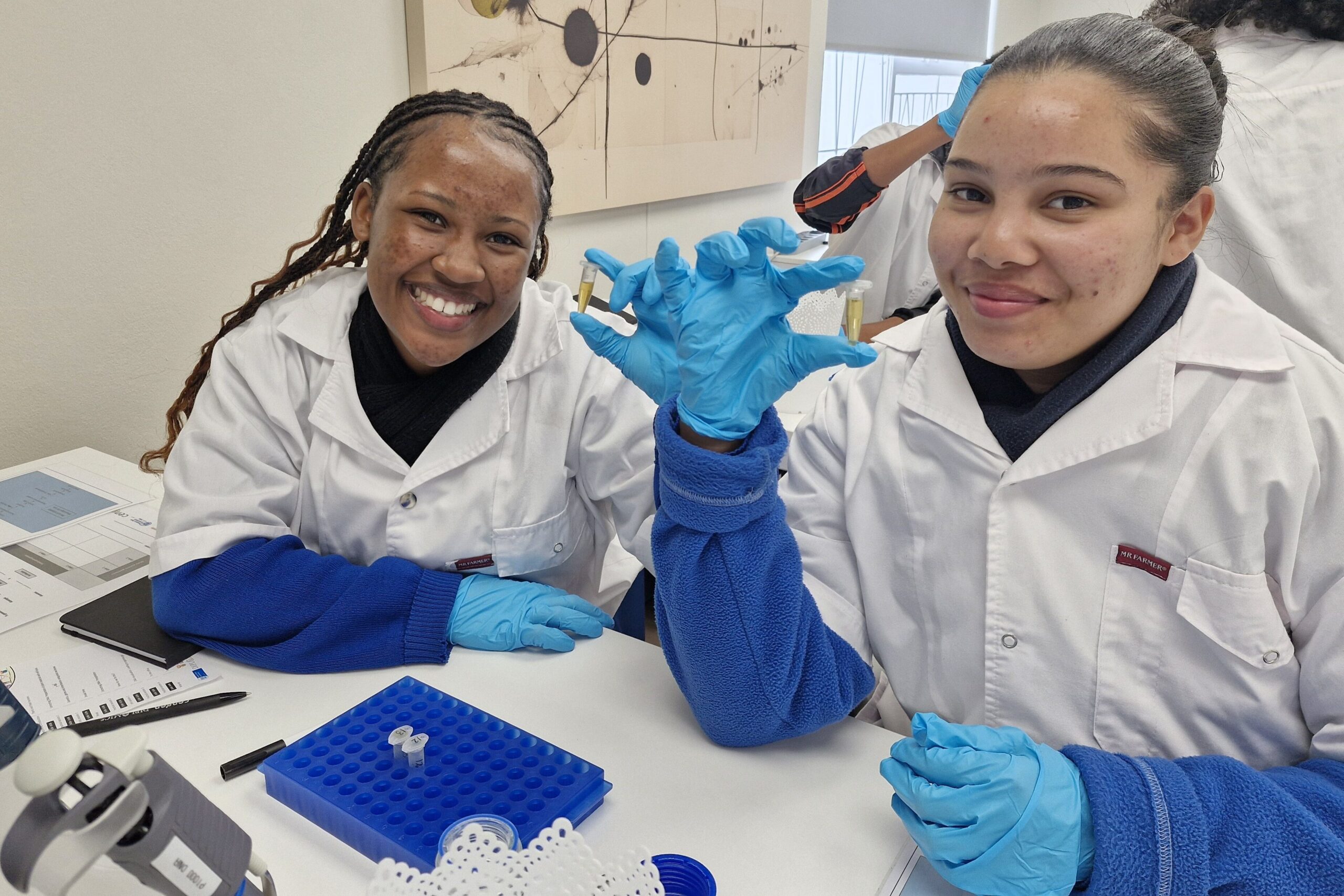
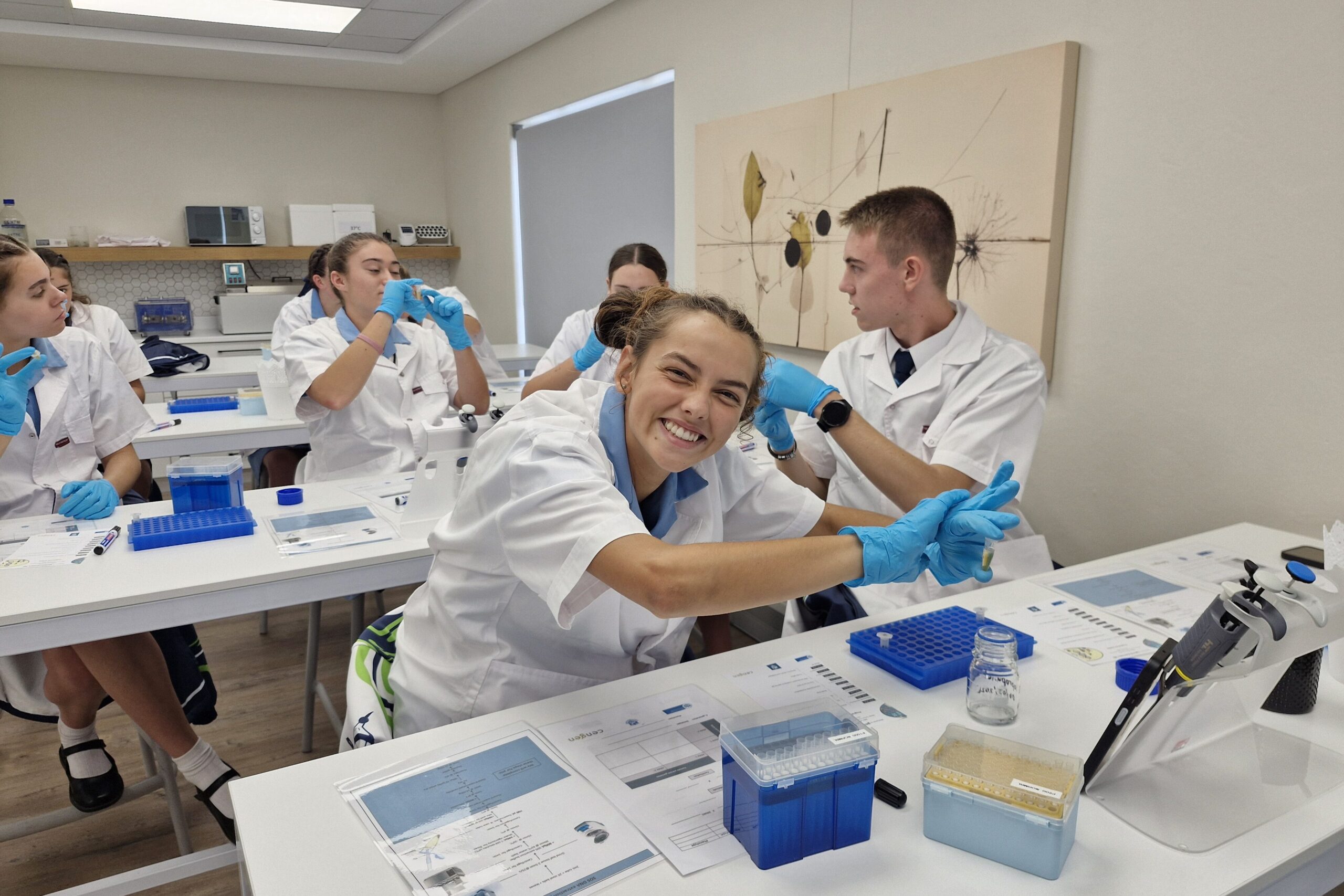
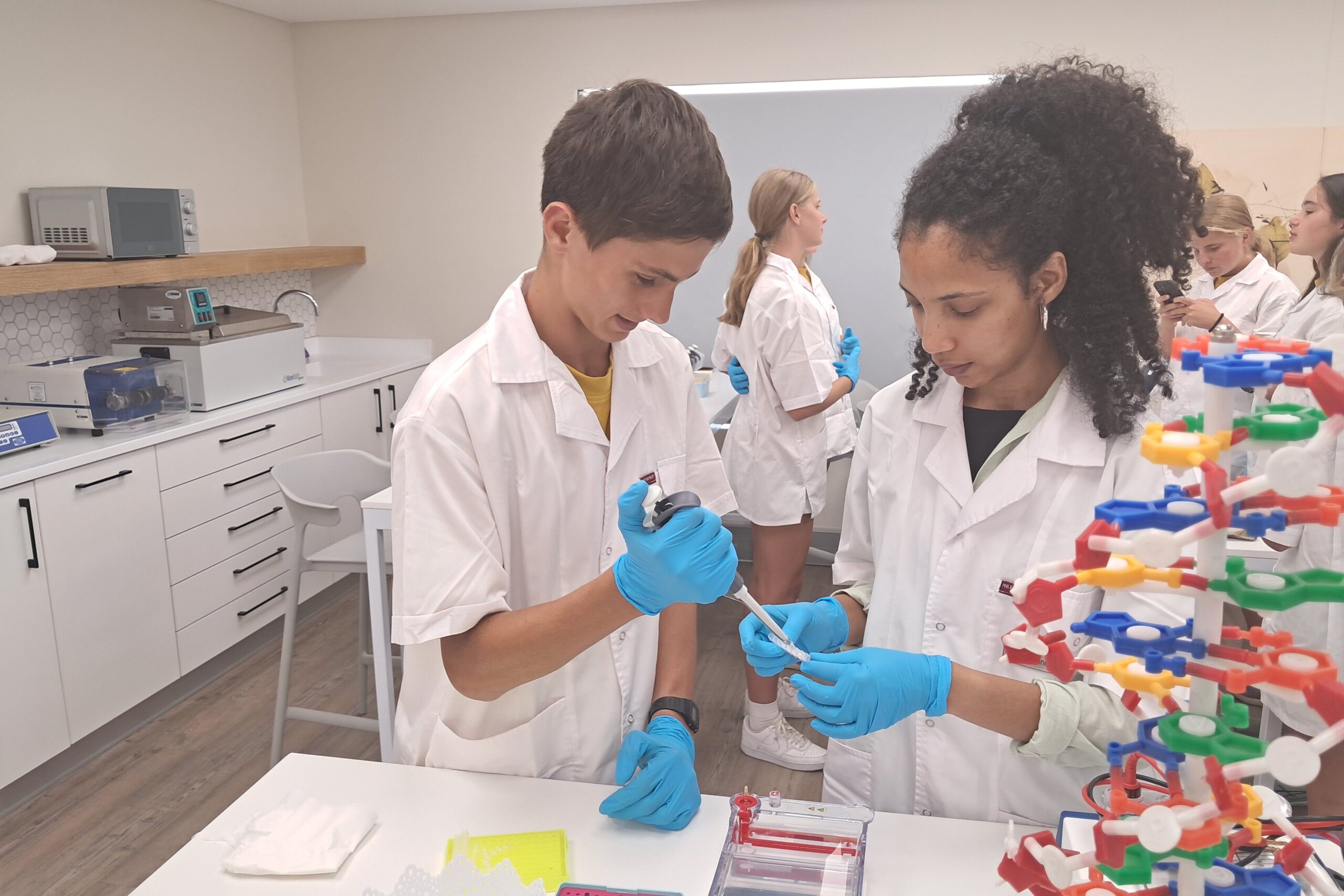
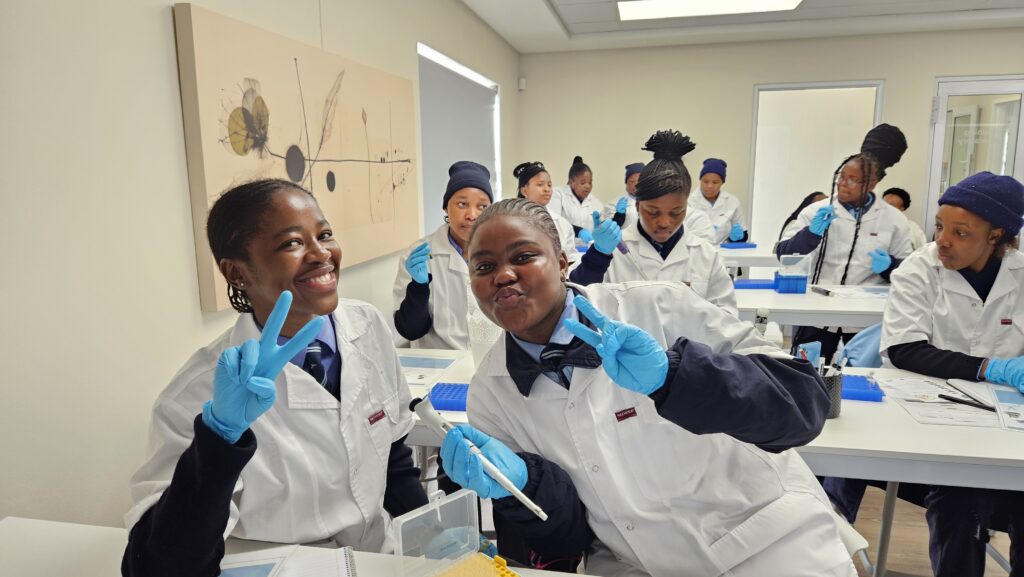
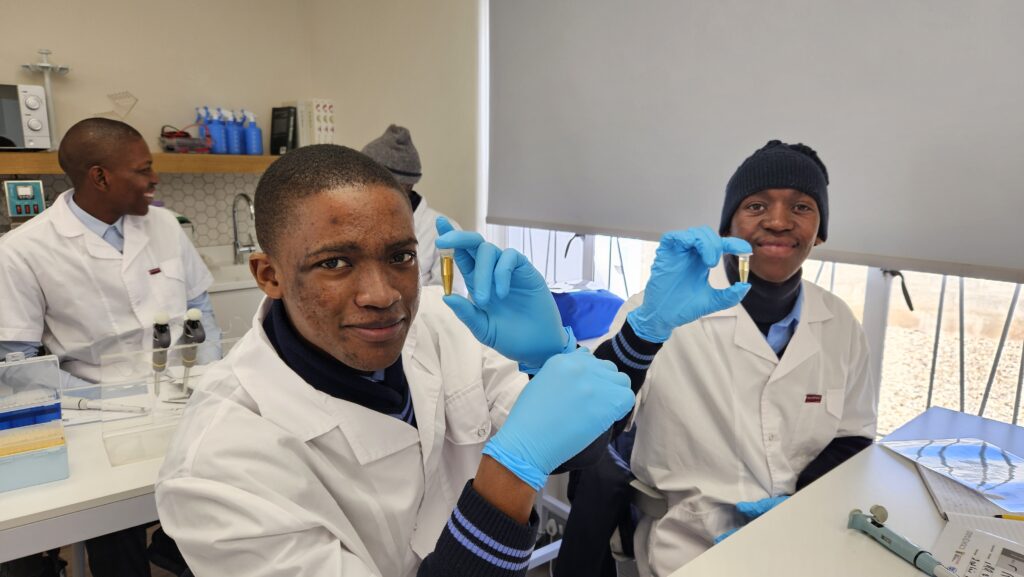
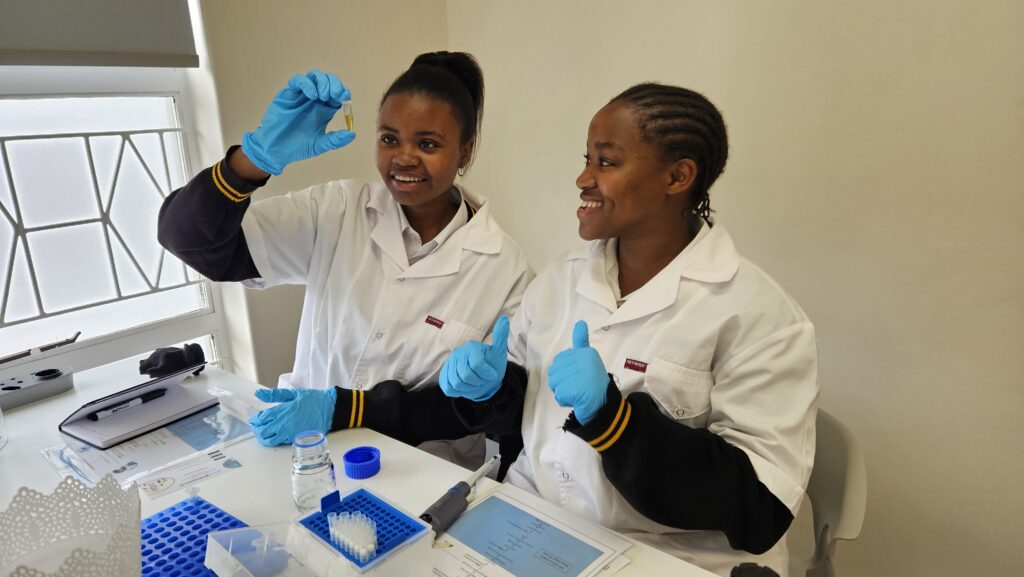
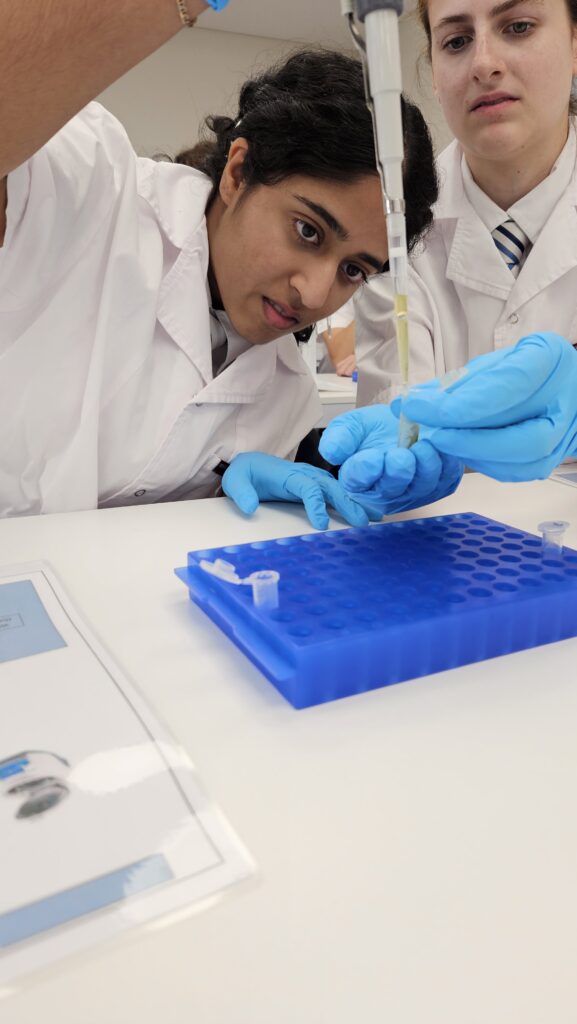
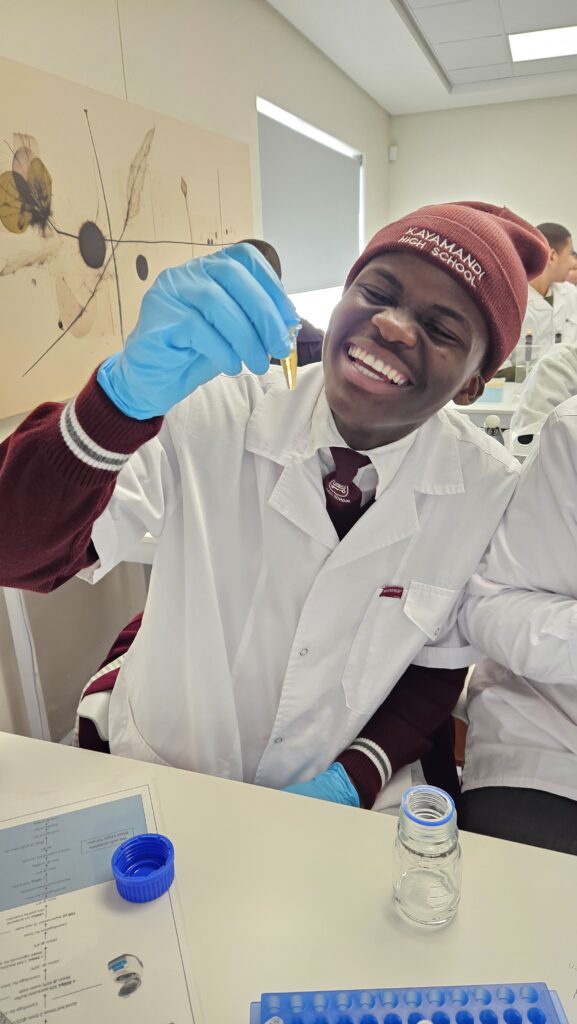
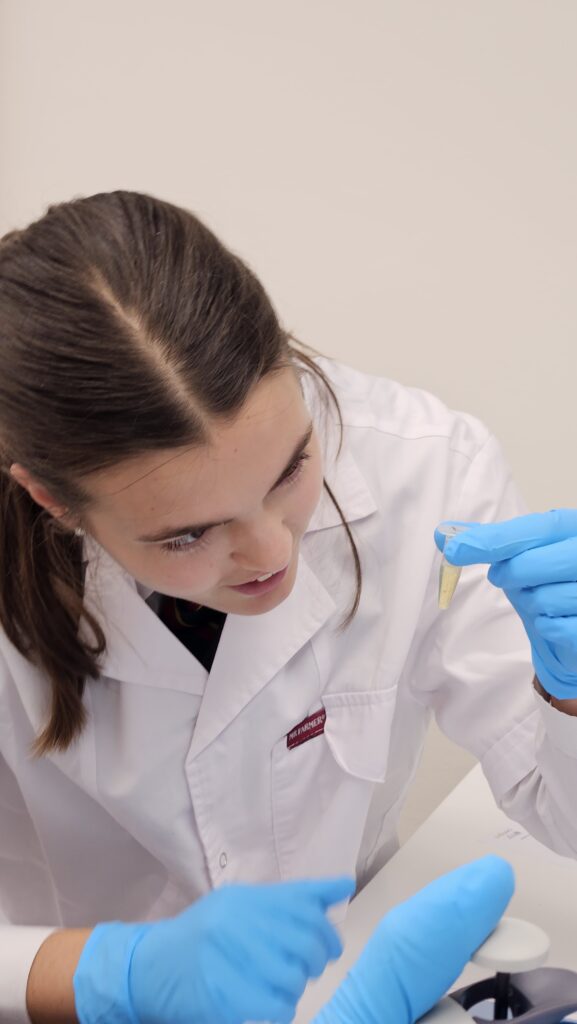
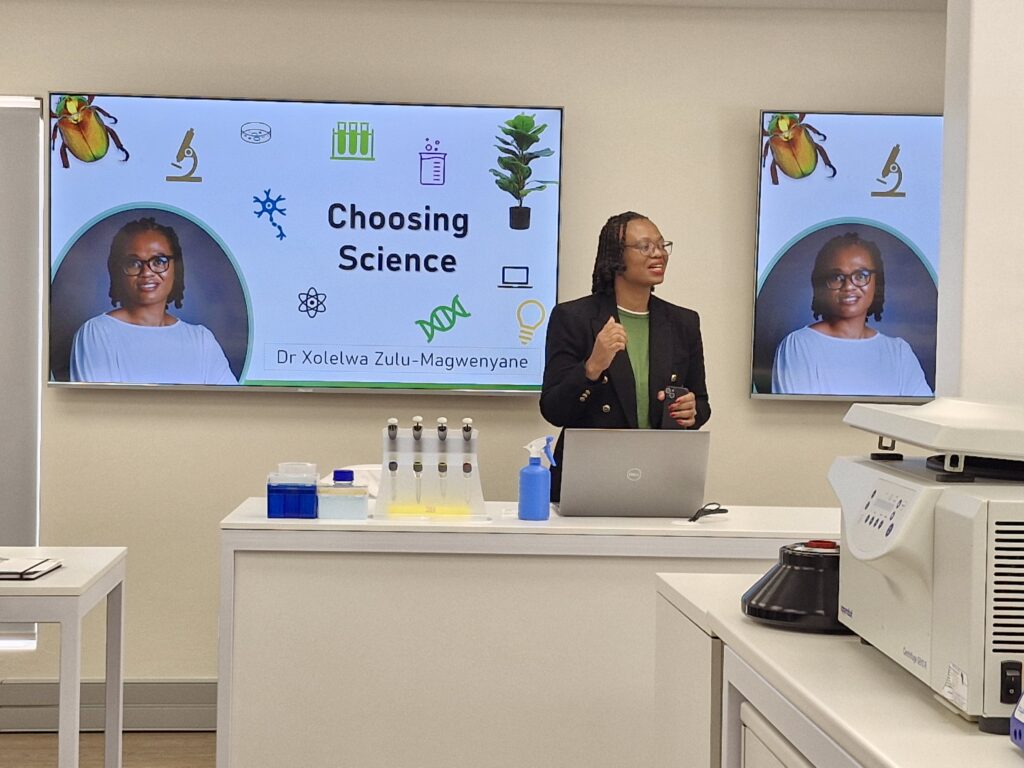
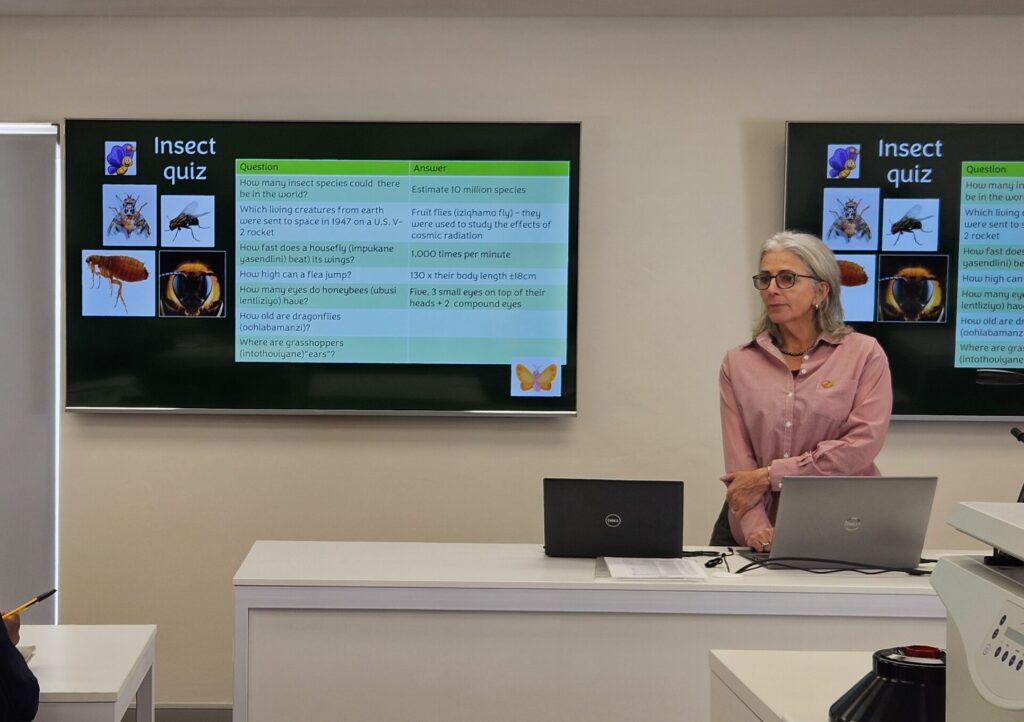
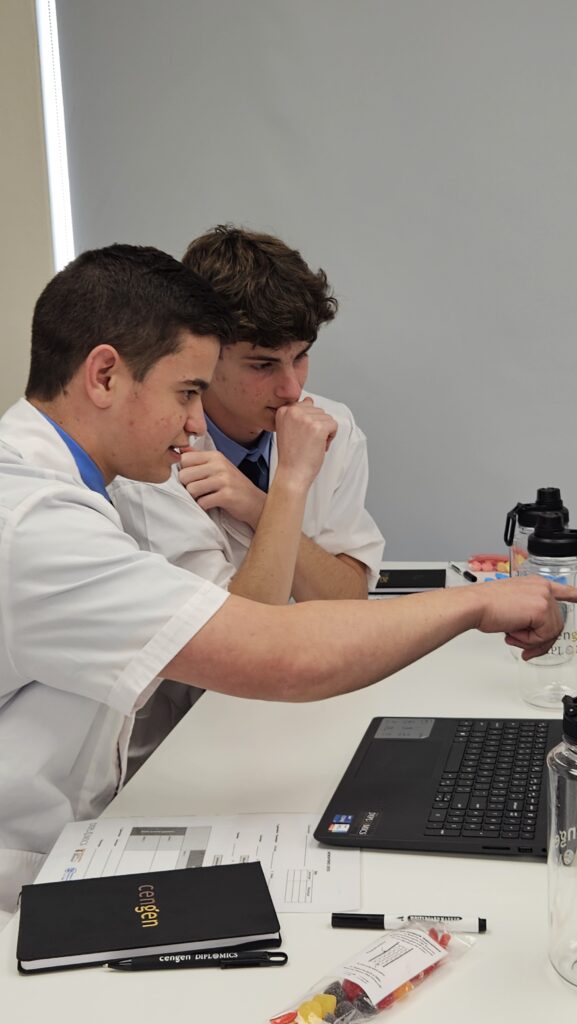
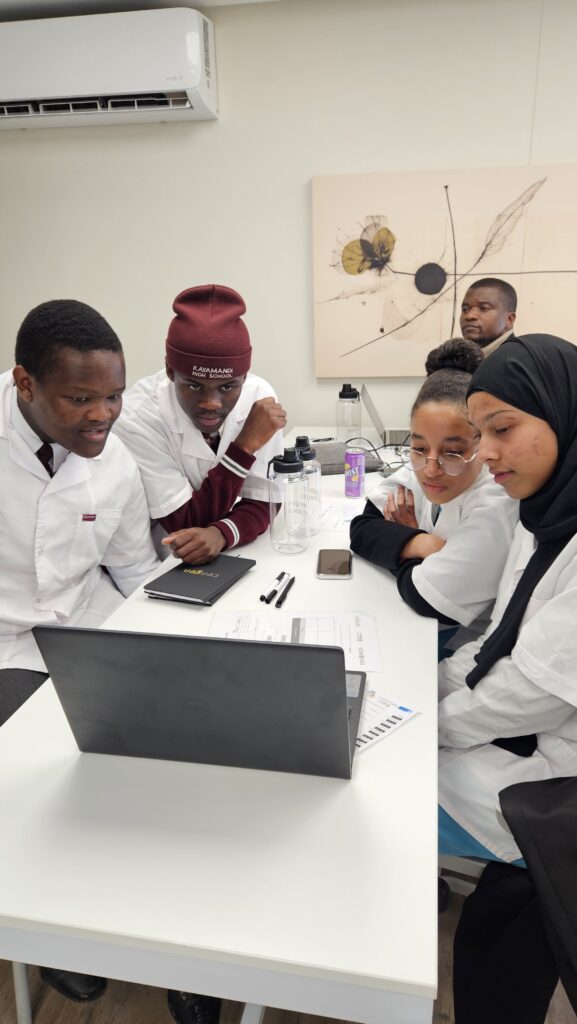
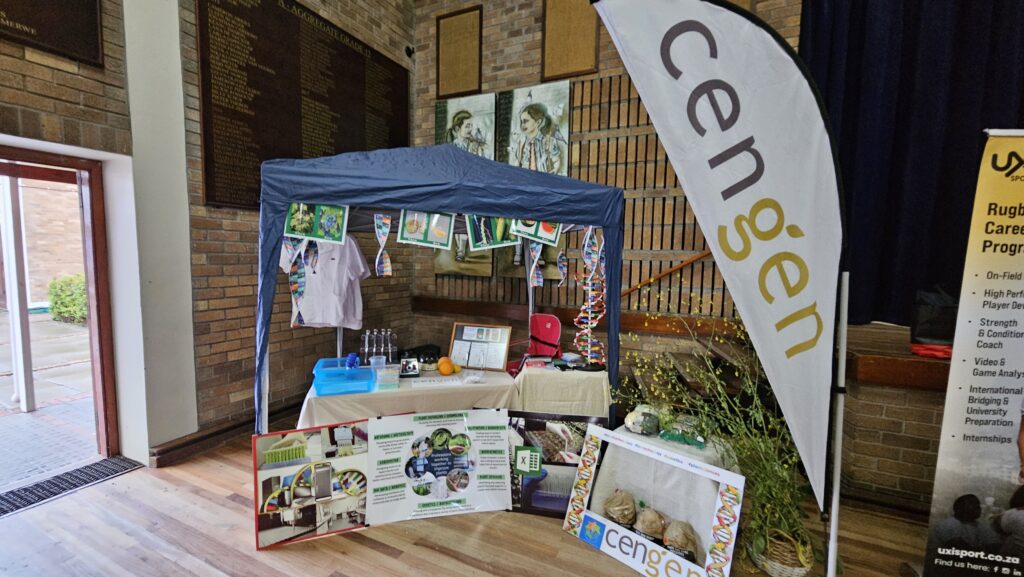
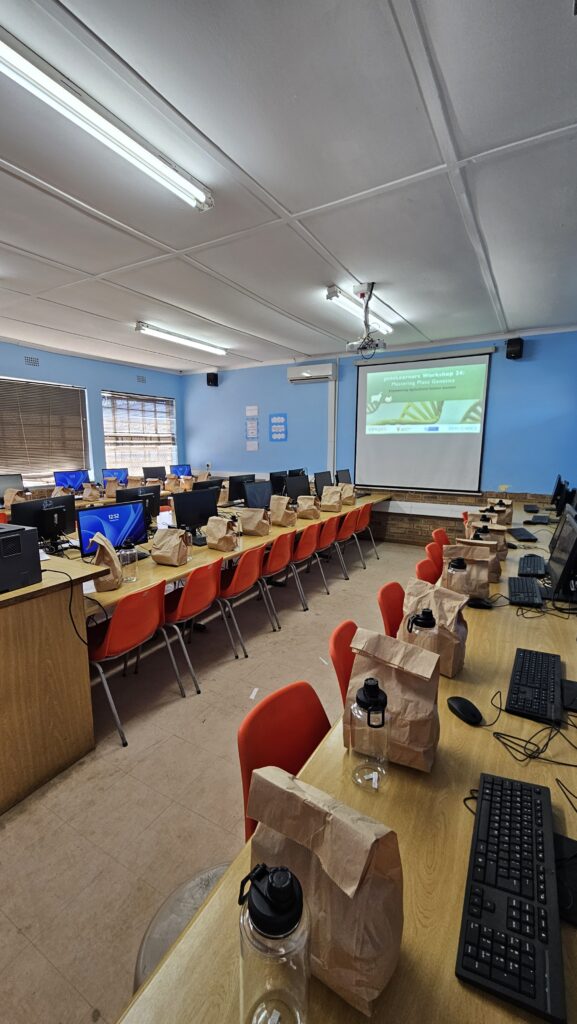
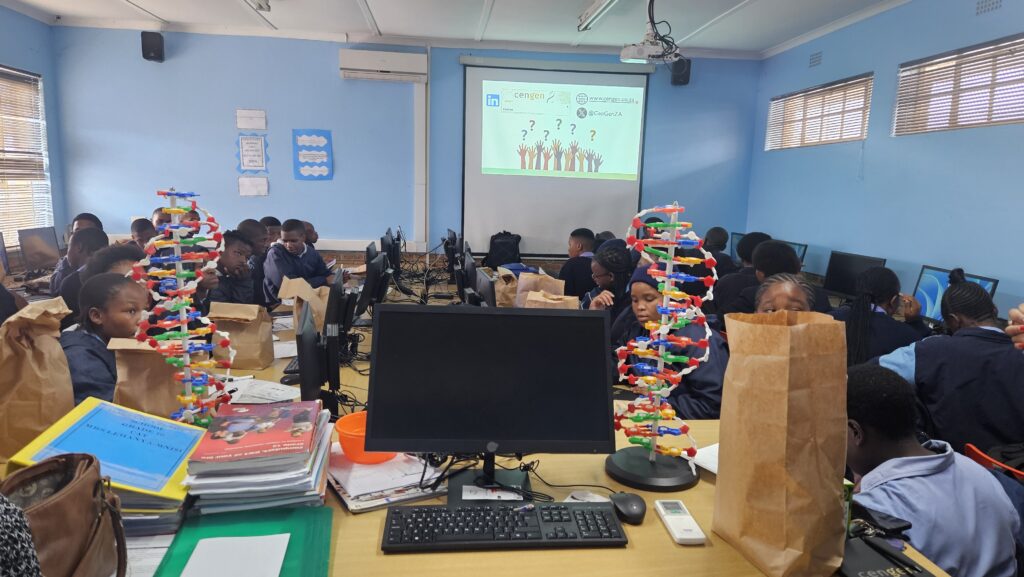
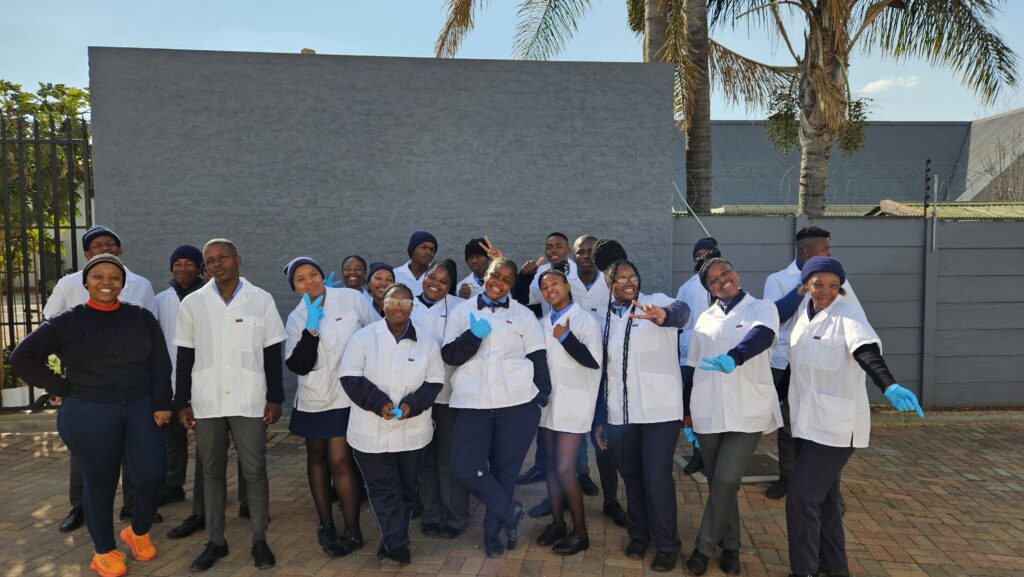
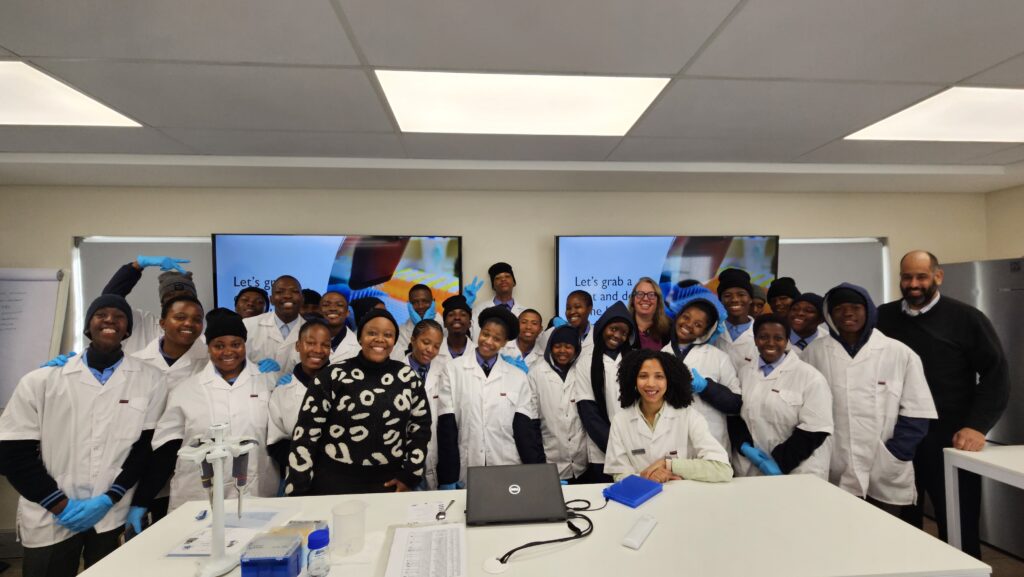
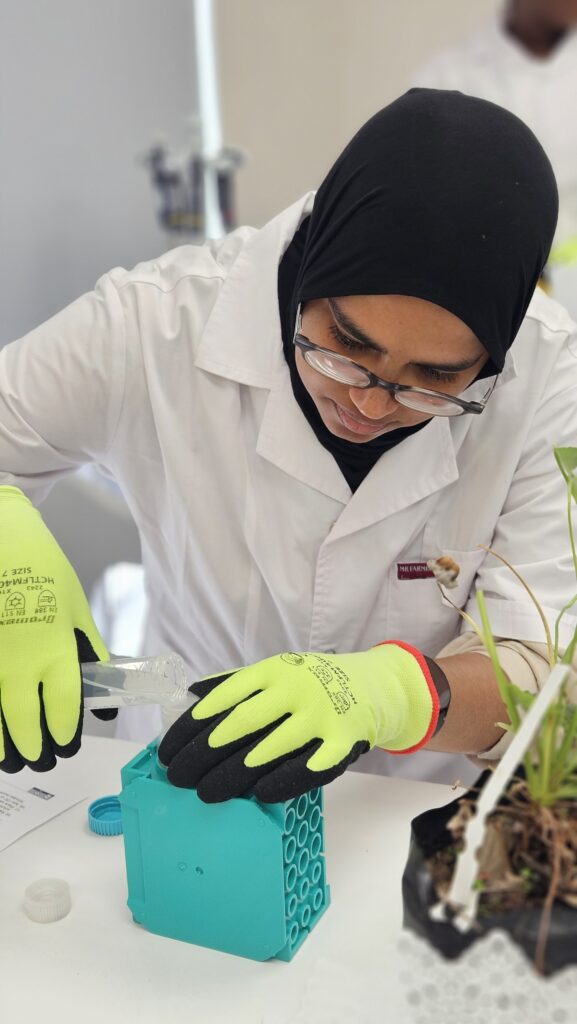
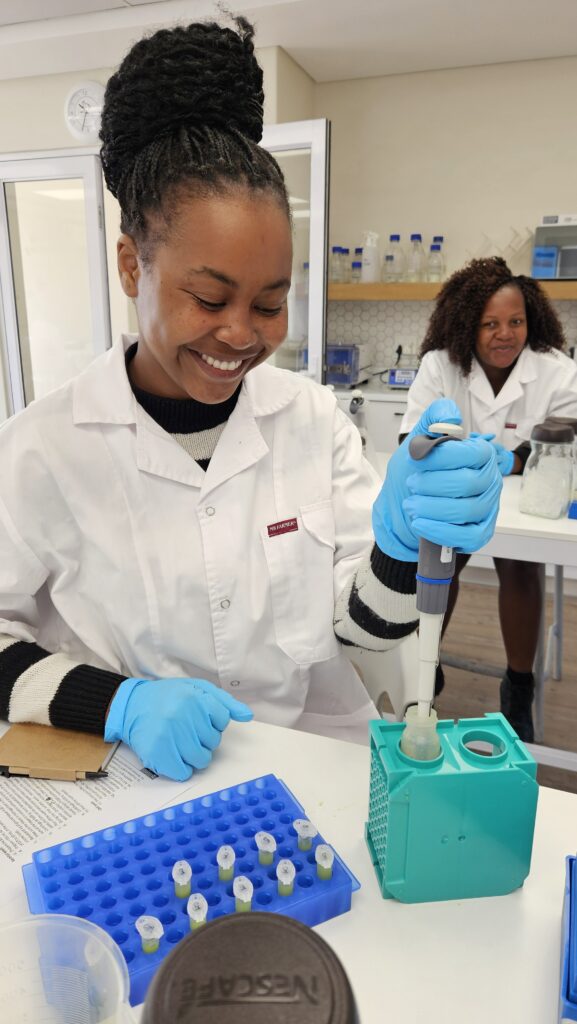
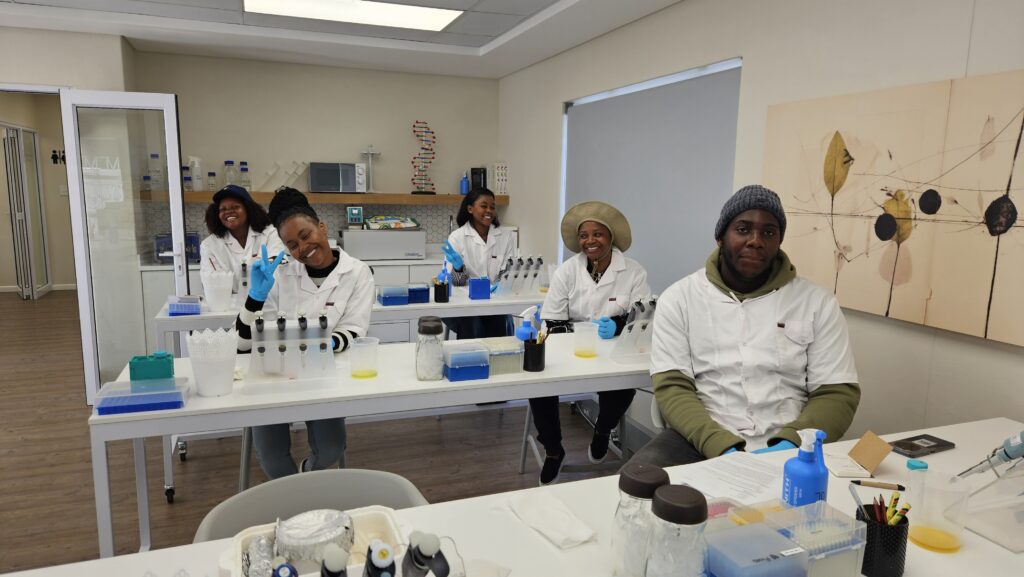
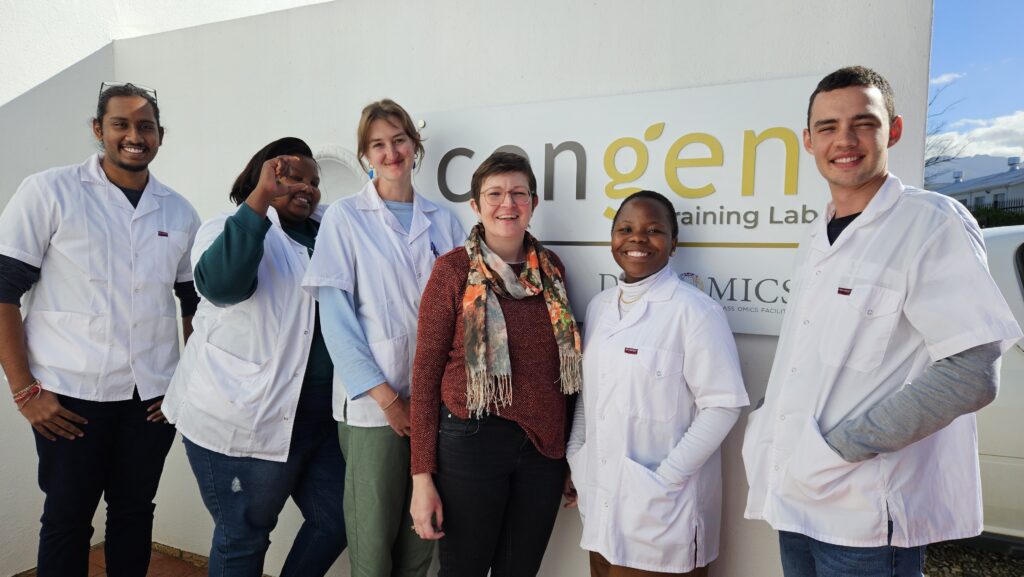
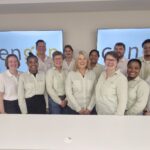
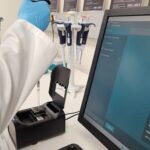
Lots of fun was had while working through a plant DNA extraction protocol. Most schools don’t have access to molecular laboratory equipment, and visiting a “real” laboratory introduces new career opportunities to students who haven’t been exposed to any omics applications.Dr Xolelwa Zulu, CenGen independent director, sharing lessons she’s learnt on her scientific journey.Dr Vicki Tolmay, Entomologist at Agricultural Research Council, Small Grain, getting learners all excited about the interesting and important role of bugs in the ecosystem.We were privileged to welcome experienced scientists in different scientific fields this year who highlighted careers outside of the “traditional” ones such as medicine and engineering.From 2025 we are including a basic bioinformatics session in the workshops. Attendees have the opportunity to discover how coding skills are becoming an integral part of data analysis and management by performing a basic sequence alignment to solve a scientific question. Even students who state that “computers are not really my thing” enjoy this session and feel accomplished when “it works!”.Our interactive stall at the Cape Winelands Education Career Kaleidoscope 2025 at Worcester GymnasiumOur relationship with Iingcinga Zethu Senior Secondary School in Ceres continued for a third year. Michaela traveled to Ceres on four different occasions to help the Agricultural Sciences Gr12s with the genetics component of their curriculum.Most workshops took place at our DIPLOMICS-funded training lab, but we also went on field trips.A kind generation from SANSOR towards transport and workshop fees allowed the whole class of Iingcinga Zethu SSS to travel to Worcester for a hands-on practical lab experience. Pictured with them are their teacher, Ms Mbonjwa (front center), DCES Dr Mariette Wheeler (back center) and SES Mr. Matthew Shroeder (far right).We did not only host schools this year. Five workshops as part of DIPLOMICS’ 1KSA initiative (4) and the African BioGenome Project (AfricaBP) Open Institute Southern Africa Regional Workshop series (1) were presented for post-graduate students and researchers on how to extract high molecular weight DNA from tricky plant species such as succulents.